
Over the past 20+ years, I have been working as a software engineer, architect, and programmer, creating, designing, and programming various applications. My main focus has always been to achieve business goals and transform business ideas into digital reality. I have successfully solved numerous business problems and increased productivity for small businesses as well as enterprise corporations through the solutions that I created.
My strong technical background and ability to work effectively in team environments make me a valuable asset to any organization.
The article begins by highlighting the dynamic nature of image processing in the context of advancing information technology. It predicts a future shift from image to video processing due to the increasing prevalence of videos over text-based media. The Video Stream Matcher (VSM) is introduced as a tool for analyzing video data using statistical models like KS Test, Variation, Mean, and Norm.
Key frames extraction is identified as a technique to minimize the vast collection of frames in a video. Four features are extracted from each frame: histogram, edge, slope, and wavelets. The literature review section references research papers and books that inform the implementation of VSM, including studies on similarity analysis of video sequences and key frame extraction.
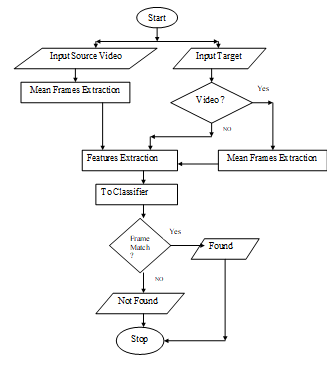
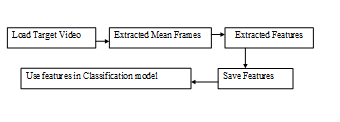
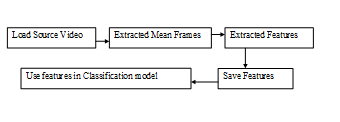
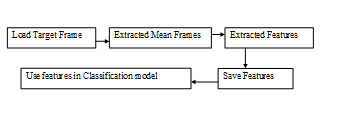
The key elements of VSM are outlined, including the input of source and test data (videos or images), key frames extraction, feature extraction, and application of statistical models for decision making. The problem statement highlights the need for automated video evaluation systems, particularly in scenarios like security checks on public transportation and video database management in TV stations.
The proposed solution revolves around VSM’s ability to process videos, focusing on key frames extraction, feature extraction, and statistical model application for decision making. The scope of the project encompasses mean frame extraction, feature extraction algorithms, and dual-phase statistical decision making. The organization of the report is structured to cover research findings, implementation details, software functioning, and conclusions with future work discussions.
Algorithm 3 extracts edge map features from BMP images. It begins by converting the image to grayscale if necessary and applies the Canny algorithm, returning the image edges. The process involves steps like Gaussian filtering to remove noise, Sobel operator application in horizontal and vertical directions, and angle calculation for each pixel. The resulting edges are thresholded and subjected to double thresholding for refinement. Finally, the processed image with edge maps is returned.
Algorithm 4 operates similarly but focuses on extracting edge angles instead of edge maps. It follows a comparable process, including Gaussian filtering, Sobel operator application, and angle calculation, but stores the occurrences of each angle in tiles of the image, returning an array defining the edge angles.
An image, in digital form, is a representation of a photograph, drawing, or text document. Mathematically described as a two-dimensional function, it consists of pixels, each with a specific brightness value. Digital images come in three basic file formats: Vector, Raster, and Meta. Vector images are defined by mathematical formulas, allowing for high quality and small file sizes. Raster images are composed of pixels, forming a dot-pattern image, suitable for photographs and scanned images. Meta images combine vector and raster information, useful for including text and annotations in raster images while maintaining quality.